India’s Circular Economy Moment: Can Waste Become Wealth?
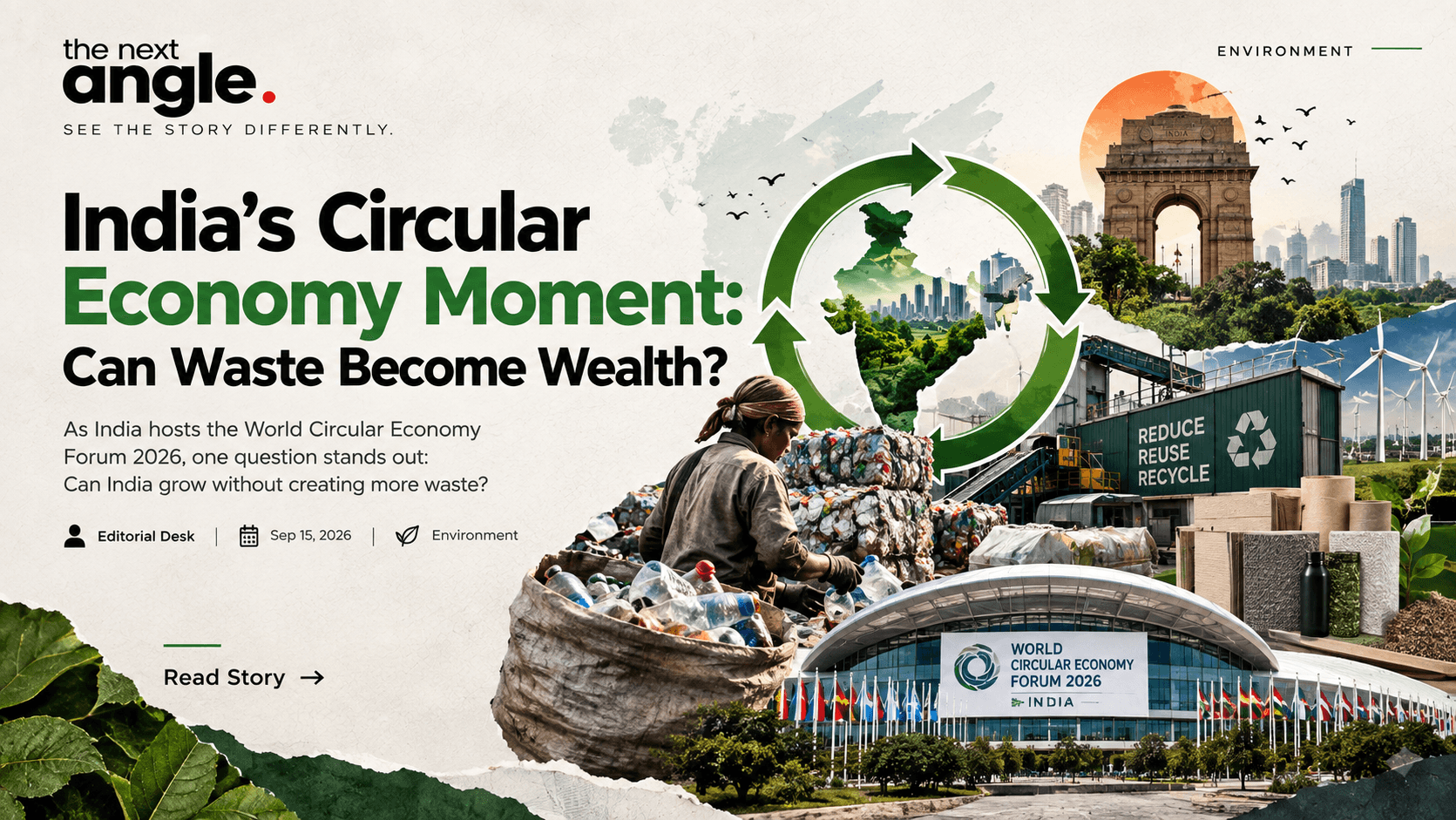
As India hosts the World Circular Economy Forum 2026, one question stands out: Can India grow without creating more waste?
By Editorial Desk1 min read
Share this story
India will host the World Circular Economy Forum 2026 in Gandhinagar from September 15–18, bringing global stakeholders together to discuss sustainable production, circular finance and innovation. The key question: Can waste become value?
India’s Circular Economy Moment: Can Waste Become Wealth?
Subtitle: India’s growing waste problem is creating an urgent need for smarter production, responsible consumption and a circular economy that turns discarded materials into new value.
For decades, economic growth has followed a familiar pattern. Countries extract natural resources, manufacture products, sell them to consumers and eventually throw them away. This system has helped economies expand, but it has also created a growing environmental problem. Mountains of waste, polluted water, rising emissions and pressure on natural resources are now forcing governments and businesses to rethink how the economy works.
India is entering this debate at an important moment. The country is hosting the World Circular Economy Forum 2026 in Gandhinagar from September 15 to 18, bringing together stakeholders from more than 65 countries to discuss circular finance, sustainable development and innovation. The event highlights a major shift in thinking: waste should not always be treated as something to be discarded. It can also become a resource, a business opportunity and a part of a more sustainable economic system.
Hindustan Times
When a Name Disappears From the Voter List, What Happens to Democracy?
The idea behind a circular economy is simple. Instead of producing something, using it once and throwing it away, products and materials should remain useful for as long as possible. They can be repaired, reused, refurbished, recycled or redesigned. In this model, economic growth is not completely dependent on extracting more raw materials from the planet.
This approach is becoming increasingly important for India because the country’s population, cities and consumption patterns are expanding rapidly. More people are buying electronic devices, packaged goods, vehicles, clothing and household products. As consumption increases, the amount of waste also grows. The challenge is not only how to collect this waste, but also how to prevent valuable materials from being lost.
Plastic is one of the clearest examples of this problem. Plastic products are useful because they are lightweight, durable and inexpensive. However, when they are used for a short period and discarded, they can remain in the environment for decades. Plastic waste can enter rivers, damage ecosystems and break down into smaller particles that are difficult to remove.
A circular economy would require companies to think about the entire life cycle of their products. This means designing packaging that uses fewer materials, creating products that can be repaired and building systems that make recycling easier. It also means asking whether a product needs to be thrown away at all.
Electronic waste presents another major challenge. Mobile phones, computers, batteries and other devices contain valuable materials, including metals that require energy and resources to extract. When electronic products are discarded without proper processing, these materials are lost and hazardous substances can enter the environment.
India’s growing technology sector makes electronic waste management especially important. As consumers upgrade devices more frequently, the country will need stronger systems for collection, repair, recycling and responsible disposal. This could create new employment opportunities while reducing pressure on mining and imports.
India’s Growing Waste Challenge
The circular economy is not limited to recycling. Recycling is only one part of the larger process. A truly circular system begins at the design stage. Products should be created to last longer, use fewer resources and be easier to repair or disassemble.
For example, a company that designs a washing machine with replaceable parts may reduce waste more effectively than a company that simply recycles the machine after it breaks. Similarly, a clothing brand that produces durable garments and supports repair or resale may create less environmental damage than one that depends on rapid consumption.
This change will require businesses to rethink their priorities. For many companies, success has traditionally been measured through sales volume and short-term profit. A circular model may require greater attention to product quality, resource efficiency and long-term value.
That transition will not always be easy. Designing durable products can increase initial costs. Setting up repair networks requires investment. Recycling systems need infrastructure, skilled workers and reliable markets for recovered materials. Companies may also need to change their supply chains and business models.
However, the long-term benefits could be significant. Using materials more efficiently can reduce production costs, lower dependence on imported resources and protect businesses from supply disruptions. In a world where energy prices, geopolitical tensions and climate risks are creating uncertainty, resource efficiency can become a competitive advantage.
For India, the circular economy also has an employment dimension. Waste collection, repair, refurbishment, recycling and material recovery can support millions of livelihoods. With better training, safety standards and formal systems, these activities could become more productive and dignified sources of employment.
The informal waste sector already plays an important role in recovering materials from cities. Waste pickers and small recycling businesses often collect materials that would otherwise end up in landfills. Yet many workers operate without adequate safety equipment, social protection or stable income.
A successful circular economy must recognise their contribution. Environmental progress should not come at the cost of vulnerable workers. Instead, better policy can help integrate informal workers into formal waste management systems while improving their working conditions.
Cities will be central to this transformation. Urban areas generate large quantities of household waste, construction debris, sewage and discarded products. They also have the infrastructure, markets and consumer networks needed to support circular systems.
Indian cities could make a major difference by improving waste segregation, supporting composting, developing material recovery facilities and encouraging local repair businesses. Construction and demolition waste could also be reused in roads, buildings and other infrastructure projects.
But technology alone will not solve the problem. Citizens must also participate. Waste segregation at home, responsible consumption and proper disposal of electronic products are essential parts of the system. If different types of waste are mixed together, recycling and recovery become more difficult and expensive.
Public awareness therefore needs to move beyond occasional cleanliness campaigns. People must understand that waste management begins before a product reaches the dustbin. Every purchase is also a decision about resources, packaging and environmental impact.
Can Circular Growth Become India’s Next Opportunity?
Government policy will play an important role in making this shift possible. Clear standards, producer responsibility rules, recycling targets and incentives for sustainable design can encourage businesses to change their practices. At the same time, enforcement must be strong enough to prevent environmental responsibility from becoming only a marketing slogan.
Financial institutions also have a role to play. Circular businesses may require new types of investment because their returns can depend on long-term systems rather than immediate sales. *Circular finance can support recycling infrastructure, green manufacturing, repair networks and resource-efficient technologies.
*
The World Circular Economy Forum’s focus on circular finance reflects this need for stronger cooperation between governments, investors and businesses. Without financial support, many sustainable ideas may remain limited to pilot projects instead of becoming large-scale solutions.
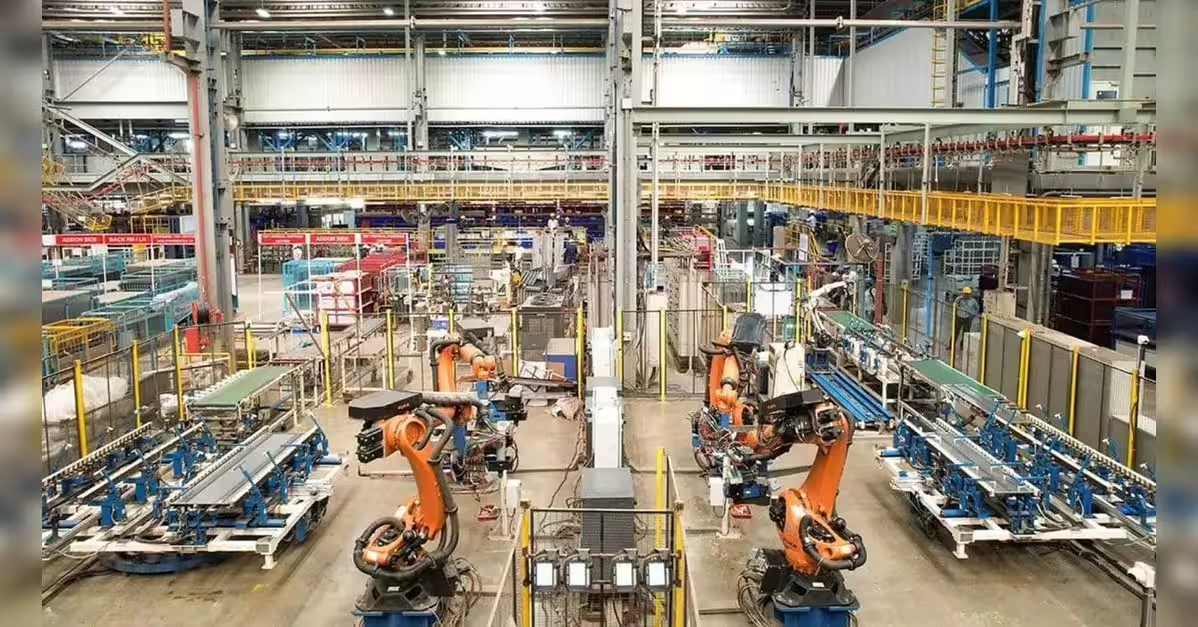
India also has an opportunity to connect the circular economy with its manufacturing ambitions. If factories use recycled materials, reduce waste and improve energy efficiency, the country can strengthen domestic production while lowering environmental pressure.
This could be particularly important in sectors such as automobiles, electronics, textiles, packaging and construction. These industries consume large quantities of raw materials and generate significant waste. More efficient production systems could help India become both a stronger manufacturing economy and a more sustainable one.
The challenge, however, is to avoid treating the circular economy as a fashionable term without meaningful change. A company should not claim to be sustainable simply because it uses recyclable packaging. The larger questions are whether it reduces total material use, extends product life and takes responsibility for what happens after the product is sold.
Consumers also need better information. Labels should clearly explain whether a product is recyclable, repairable or made from recycled materials. Without reliable information, people may find it difficult to distinguish genuine sustainability from greenwashing.
The circular economy also connects directly with climate change. Extracting raw materials, manufacturing products and transporting goods require energy. When materials are reused and products last longer, the need for new production can decrease. This can help reduce emissions, although the exact benefit depends on the material, technology and energy source involved.
A circular economy cannot replace every climate solution. Renewable energy, cleaner transport and stronger environmental protection remain essential. But it can reduce the amount of energy and resources required to support economic activity.
India’s circular economy journey will therefore be closely connected to its wider development choices. The country must create jobs, expand infrastructure and improve living standards while also protecting water, land, forests and air.
That balance will not be achieved through one conference or one policy. It will require changes across the entire economy—from product design and manufacturing to consumer behaviour, waste collection and financial investment.
The World Circular Economy Forum provides an important platform for these conversations. But the real test will begin after the discussions end. Will businesses redesign their products? Will cities improve waste systems? Will investors support circular solutions? And will consumers receive better options?
**The answers will determine whether the circular economy becomes a genuine transformation or remains another environmental promise.
**
India’s future growth will depend not only on how much it produces, but also on how intelligently it uses resources. The country has the opportunity to build an economy where materials stay in circulation, waste is reduced and innovation supports both prosperity and environmental protection.
The next economic revolution may not be about producing more. It may be about wasting less.