How India’s Old Trade Routes Shaped the Cities We Know Today
Long before highways, airports and digital marketplaces connected India, ancient trade routes linked ports, towns, kingdoms and cultures — and many modern Indian cities still carry the imprint of that forgotten commercial geography.
By Editorial Desk8 min read
Share this story
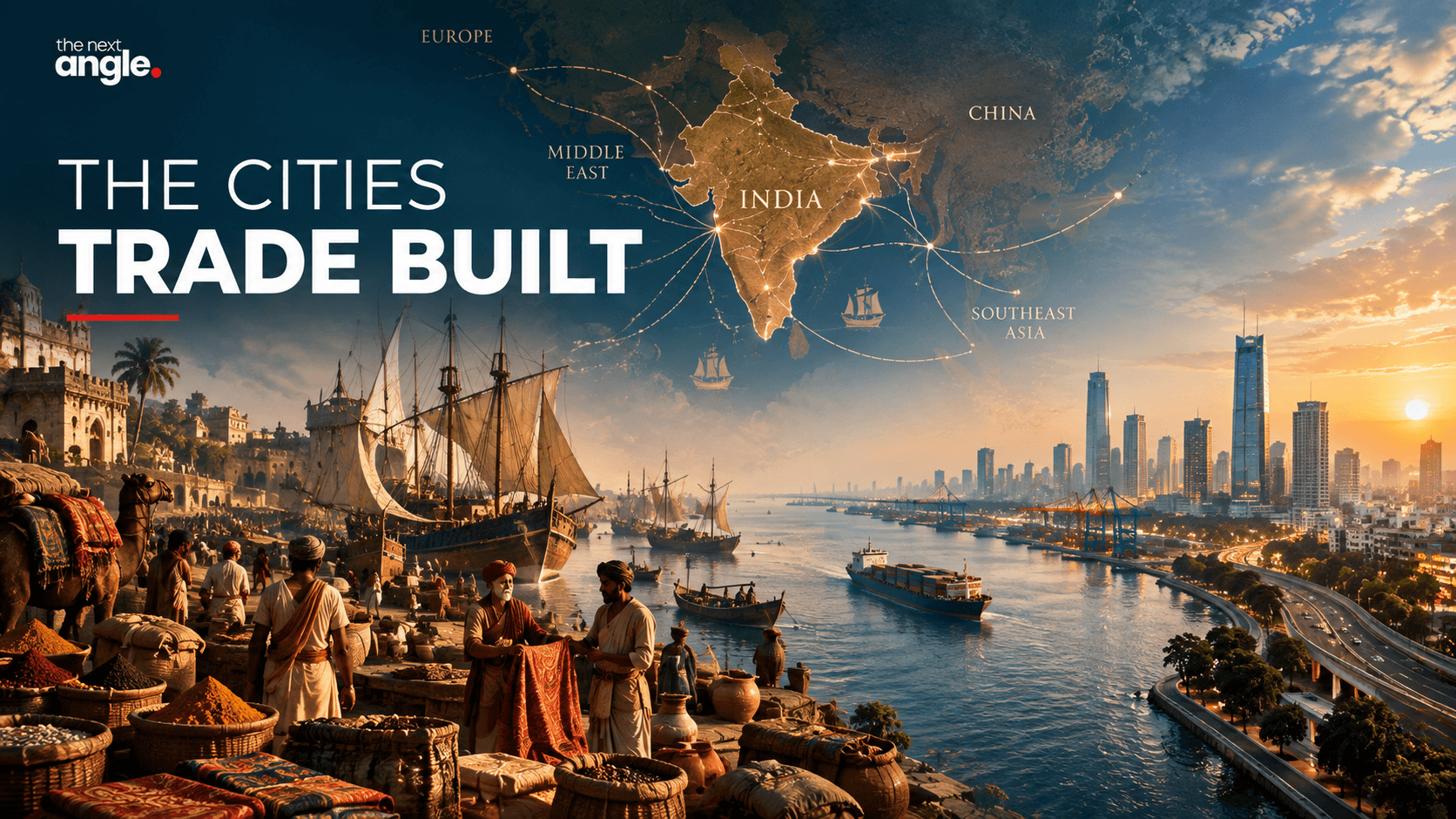
India’s cities did not grow only because kings built capitals or empires expanded their territories. Many developed because people, goods, ideas and cultures moved through them. From ancient ports on the western coast to inland trading centres, old trade routes helped shape the economic and cultural map of India.
India’s Cities Have a Commercial History Most People Rarely See
When we look at an Indian city today, we usually see roads, markets, offices, railway stations and residential neighbourhoods. But beneath that modern landscape is another map - one created by merchants, travellers, sailors, artisans and traders who moved across the subcontinent centuries ago.
Some of India's important settlements grew around routes where goods changed hands. Others became important because they connected agricultural regions with ports, or linked inland kingdoms with markets on the coast. In many cases, trade did more than create wealth; it helped determine where communities settled and how cities developed.
Before Highways, Trade Had Its Own Geography
Modern transportation makes it easy to imagine India as a network of roads and railway lines. Earlier economies depended on a very different combination of rivers, mountain passes, coastal routes and land corridors.
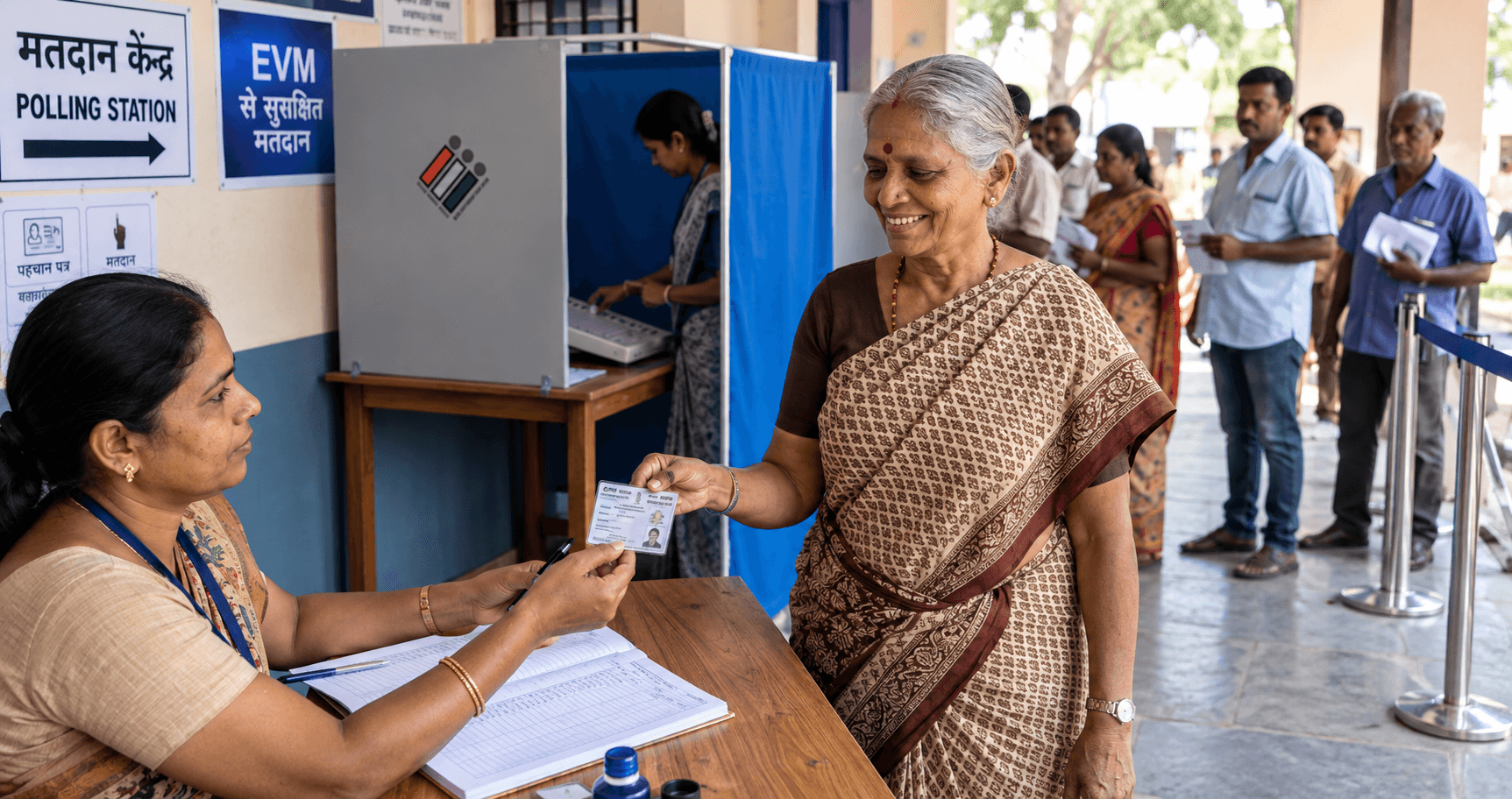
When a Name Disappears From the Voter List, What Happens to Democracy?
Merchants had to think carefully about distance, water, weather and security. A route that connected a productive agricultural region to a major market could become economically important for generations. Towns along such routes could provide storage, accommodation, food, animals, financial services and marketplaces.
That meant trade routes were not simply lines connecting two destinations. They created a chain of economic activity around themselves.
Ports Became Gateways Between India and the World
India's long coastline gave maritime trade an important role in its history. Ports connected Indian producers and merchants with commercial networks stretching across the Arabian Sea, Bay of Bengal and beyond.
Ancient and medieval ports were places where spices, textiles, precious stones, metals, agricultural products and other goods could move between different markets. But products were not the only things travelling through these gateways.
Languages, religions, technologies, artistic influences and culinary traditions also travelled with merchants and migrants.
The Western Coast Became a Major Commercial Corridor
The western coast of India was particularly important because of its connection with Arabian Sea trade. Ports in regions such as Gujarat and the Malabar Coast interacted with merchants from Arabia, Persia, East Africa and other parts of Asia.
Places such as Bharuch, Cambay and later Surat became associated with commercial activity at different points in history.
Their importance was not accidental. Geography gave them access to both the sea and large inland markets.
This is one reason why the history of India's western coastal cities cannot be separated from the history of trade.
Surat Shows How Quickly a Trading City Can Rise
Surat is an interesting example of how commerce can transform a city.
During the early modern period, Surat developed into an important port and trading centre. Merchants operating there were connected to commercial networks reaching well beyond the Indian subcontinent.
The city's story also demonstrates something important about trade: commercial importance is rarely permanent.
As political conditions, technology, shipping patterns and competing ports changed, the relative importance of trading centres changed as well.
A city can become powerful because it sits at the centre of a particular network — and later lose that position when the network itself changes.
From Spices to Textiles, Trade Created Demand for Production
Trade routes also influenced what regions produced.
If merchants knew that particular textiles, spices, metals or agricultural products had demand in distant markets, production could expand around those commodities.
This created relationships between villages, workshops, markets and ports.
A textile-producing community, for example, was not economically isolated. Its products could move through several layers of traders before reaching consumers thousands of kilometres away.
In this sense, historical trade was already creating something that resembles a supply chain.
Inland Cities Were Just as Important as Ports
It would be easy to assume that India's historical trade story was primarily about coastal cities. It was not.
Inland trading centres played a crucial role in connecting production zones with major markets. Cities situated near rivers, crossroads and established routes could become important commercial hubs even when they were far from the sea.
Places such as Delhi, Agra, Varanasi and many other historic urban centres were connected to extensive networks of movement.
Their importance came partly from political power, but commerce was another major force shaping urban life.
Rivers Were the Highways of Earlier Economies
Before modern road infrastructure, rivers could provide relatively efficient transportation for people and goods.
The Ganga and its tributaries connected large parts of northern India. River-based movement supported agriculture, pilgrimage, commerce and urban development.
Settlements along important waterways could benefit from access to transportation and markets.
This helps explain why some of India's oldest cities developed near rivers. Geography did not simply provide water for life; it could also provide an economic route.
Trade Routes Carried Culture Along With Goods
One of the most fascinating parts of India's trade history is that merchants did not travel alone.
They carried stories, languages, religious beliefs, architectural influences, cooking techniques and artistic traditions.
This helped create cultural connections between regions that were geographically distant.
A dish, word, textile design or architectural style may therefore have a history that crosses several communities and trading networks.
India's cultural diversity was shaped not only by political boundaries but also by centuries of movement.
Markets Became Meeting Points of Different Communities
A successful historical marketplace could bring together people from different backgrounds.
Merchants needed accountants, translators, transporters, craftsmen, warehouse workers and financial intermediaries. Religious institutions and community organisations could also develop around commercial centres.
Over time, these interactions could change the character of a city.
This is why the history of an old market is often much bigger than the history of buying and selling. It can reveal how different communities interacted and how urban society evolved.
The Silk Route Was Bigger Than One Road
The phrase “Silk Road” often creates an image of a single ancient road crossing Asia. In reality, historical trade between Asia, the Middle East and Europe involved interconnected routes rather than one continuous highway.
India participated in these wider networks through both land and maritime connections.
Indian textiles, spices and other products entered international markets, while foreign goods and ideas also reached Indian communities.
India was therefore not simply a destination in these networks. It was also a producer, intermediary and trading partner.
Why Some Historic Trade Centres Became Modern Cities
There is an important connection between historical geography and modern urbanisation.
Cities that already possessed established markets, skilled communities, transport connections and commercial institutions had advantages when newer forms of transportation and industry arrived.
Railways and modern ports later transformed the map again, but they did not always start from zero.
In many places, modern economic centres developed in regions that already had a history of commercial activity.
The infrastructure changed. The underlying economic geography sometimes remained surprisingly persistent.
Colonial Trade Changed the Old Commercial Map
The arrival and expansion of European colonial powers significantly altered India's trading systems.
European companies increasingly influenced ports, commodities and commercial routes. Colonial infrastructure, taxation systems and export priorities changed how goods moved through the subcontinent.
Some traditional centres declined while others gained importance.
The introduction of railways later connected production areas with ports on an unprecedented scale, creating a new commercial geography that was closely tied to colonial economic priorities.
The Railway Did Not Replace Trade Routes - It Reorganised Them
When railways expanded across India, they transformed the speed and scale at which goods could move.
Agricultural products, raw materials and manufactured goods could travel much farther and more quickly than before.
Some towns located along railway networks gained new economic importance, while older routes lost part of their significance.
This is a useful reminder that cities are constantly shaped by transportation technology.
The shift from foot and animal transport to rail did not eliminate geography. It changed which geographical locations were valuable.
Many Modern Markets Have Very Old Roots
Walk through an old market area in an Indian city and there is a possibility that the commercial activity around it has a much longer history than the surrounding modern buildings suggest.
The shops may have changed. The products may have changed. The transport system may have changed.
But the reason people gather there — access, connectivity and demand — may have remained remarkably similar.
Modern commerce sometimes sits directly on top of historical commerce.
India's Food Culture Also Followed Trade Routes
Trade influenced what Indians ate.
Spices moved across regions and international markets. Ingredients travelled with merchants and communities. Cooking methods evolved as different culinary traditions met one another.
Indian food therefore cannot always be understood as something that developed within isolated regional boundaries.
Many food traditions reflect centuries of interaction between local ingredients and outside influences.
The history of Indian cuisine is, in many ways, also a history of movement.
The Forgotten Story Is About People, Not Just Routes
It is tempting to describe historical trade using only ports, cities and commodities.
But behind every trading network were people.
There were farmers producing goods, artisans making products, sailors transporting cargo, merchants financing journeys, workers loading goods and communities building markets around commercial activity.
The economic history of India was therefore also a social history.
Trade changed people's occupations, migration patterns and relationships with cities.
Why This History Still Matters Today
India is once again investing heavily in logistics, ports, industrial corridors, highways and international trade.
That makes the country's older commercial geography surprisingly relevant.
The same basic question continues to matter: where goods move, businesses follow.
The technology may be completely different, but connectivity remains one of the foundations of economic growth.
Understanding India's historical trade routes can therefore help explain why certain regions have repeatedly emerged as commercial centres.
The Next Angle
India's cities were not simply built by rulers, governments or modern industry.
Many were shaped by something quieter and more persistent: movement.
People moved. Goods moved. Ideas moved. Markets followed.
And once a place became an important point in that network, generations of economic and cultural activity could build around it.
That is perhaps the most interesting lesson hidden inside India's trade history: a city's future is often influenced by the connections it inherits from its past.