India’s Education System Is Changing: Why Skills May Matter More Than Marks
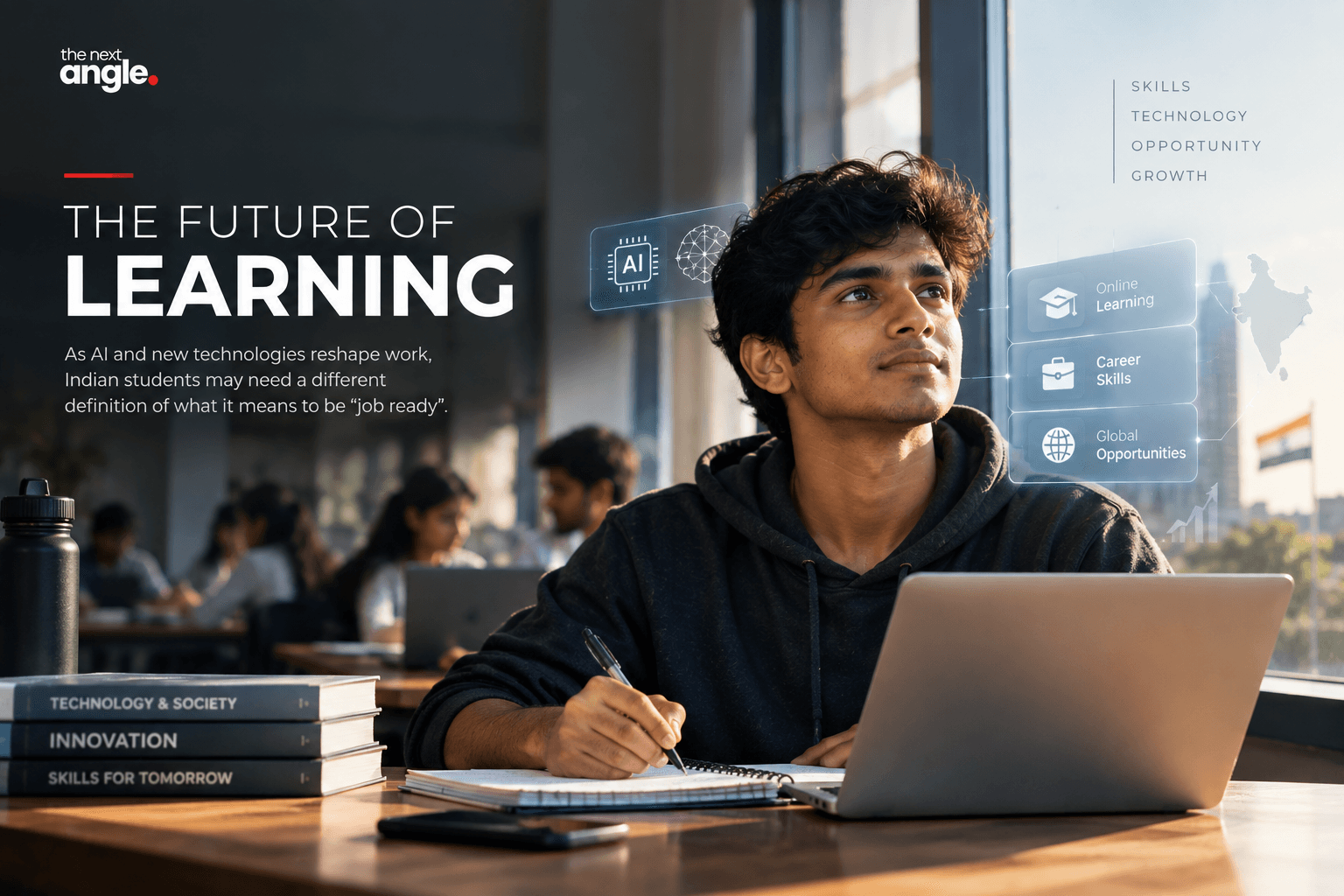
As AI and new technologies reshape work, Indian students may need a different definition of what it means to be “job ready”.
By The Next Angle6 min read
Share this story
For years, academic marks have been one of the clearest measures of success for Indian students. But as artificial intelligence, automation and digital technology reshape the workplace, education is increasingly being asked a different question...
The Question Indian Students Are Starting to Face
For generations of Indian students, the formula has been relatively simple: study hard, score well, get a degree and find a good job.
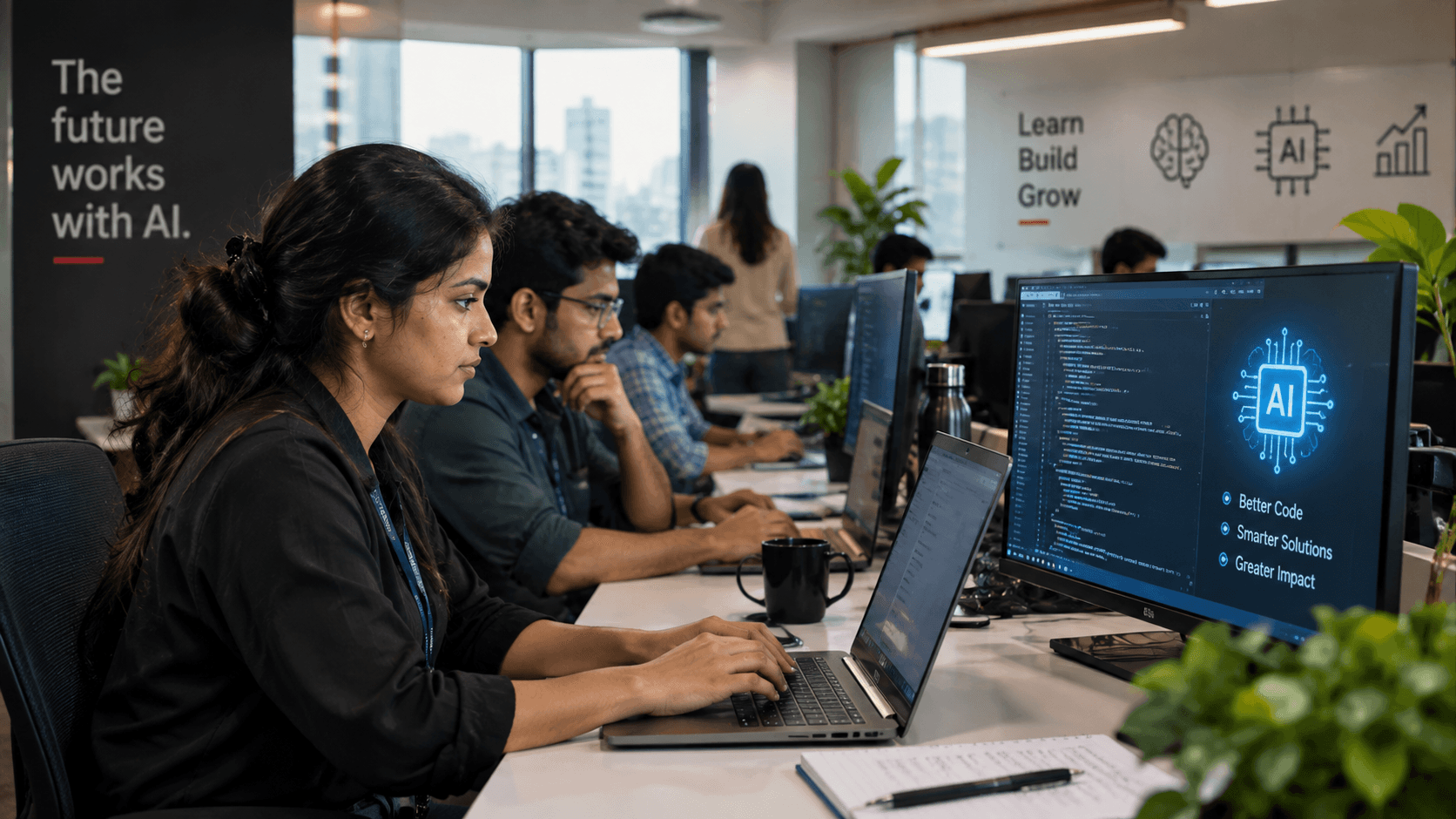
That formula still matters. But the world students are preparing to enter is changing much faster than the traditional education cycle. Artificial intelligence can now write, analyse, translate, generate images, assist with coding and perform many repetitive knowledge-based tasks.
That does not make degrees irrelevant. It does, however, raise a bigger question about what students should learn alongside their degrees.
The Education-to-Employment Gap Is Becoming More Important
A student can spend years preparing for examinations without necessarily getting enough opportunities to practise communication, problem-solving, teamwork, digital tools or real-world decision-making.
India's Economic Survey 2025-26 has highlighted the importance of foundational skills such as* literacy, numeracy, reasoning, communication and problem-solving as technology changes the nature of work*. It also points to adaptability and technology-related capabilities as important parts of future employability.
When a Name Disappears From the Voter List, What Happens to Democracy?
The issue, therefore, is not simply whether students are educated.
It is whether education is helping them adapt.
AI Is Entering the Classroom , But That Changes the Teacher’s Role Too
Artificial intelligence is already becoming part of the education conversation.
The Economic Survey has discussed possibilities such as AI-assisted learning, personalised tutoring, automated assessment and technology that can help teachers with lesson planning and professional development.
The Ministry of Education's SWAYAM Plus platform is also offering AI-focused and industry-oriented learning opportunities, including courses designed around AI, employability and emerging technologies.
But there is an important distinction here.
AI can provide information. A teacher can provide context.
That difference could become increasingly valuable.
The Student Who Knows How to Use AI May Have an Advantage
Knowing how to use AI is becoming a different skill from simply knowing that AI exists.
A student who can ask better questions, verify AI-generated information, identify errors, protect personal data and use AI as a learning assistant is developing a different kind of digital literacy.
India's National Curriculum Framework has already recognised the potential of AI, machine learning, data science, virtual reality and other emerging technologies in education, while also emphasising the need for appropriate use, safety and security.
This suggests that AI literacy in education is not simply about teaching students to use another software tool.
It is about teaching them how to think in an environment where machines increasingly participate in the process.
Marks Still Matter But They Cannot Tell the Whole Story
Marks are easy to measure.
Curiosity is harder to measure. So are communication, creativity, resilience, teamwork and the ability to solve an unfamiliar problem.
Yet these are precisely the kinds of abilities that become difficult to replace when technology handles routine tasks.
The Economic Survey has argued that strong foundational capabilities should remain central even as AI automates more routine cognitive work.
That creates an interesting shift.
The future of education may not be about choosing marks or skills.
It may be about building both.
India's Education Budget Is Also Reflecting the Skills Conversation
The Union Budget 2026-27 allocated ₹1,39,289.48 crore to the Ministry of Education, with allocations for both school education and higher education increasing from the previous year's budget estimates.
The government's 2026-27 education plans also include proposals around emerging skills and technology. One notable announcement is the proposed establishment of AVGC content creator labs in 15,000 secondary schools and 500 colleges.
The broader direction is clear: education is increasingly being connected with the skills students may need in a changing economy.
The Classroom Is No Longer the Only Place to Learn
A student's education today does not necessarily end when the school bell rings or a university semester finishes.
Online courses, open learning platforms, internships, industry projects and digital resources have expanded the number of ways a student can learn.
SWAYAM Plus currently lists more than 500 courses, with industry-oriented learning, academic credit recognition and content available in 12 Indian languages. The platform says it has more than 6.7 lakh registered learners.
That matters because the traditional model of learning—study for a few years and then use that knowledge for decades—is becoming harder to sustain.
The Rise of Lifelong Learning
Technology changes too quickly for education to be something a person completes only once.
A student may learn one programming language today and need another tool a few years later. A marketing professional may need AI skills. A teacher may need new digital teaching methods. A business graduate may need data skills that were not central to their degree.
This is why lifelong learning in India is becoming increasingly relevant.
Education may gradually become less like a single phase of life and more like something people return to repeatedly.
Soft Skills Are Becoming Hard Skills
There is an irony in the AI era.
As machines become better at technical and repetitive tasks, distinctly human abilities can become more valuable.
Communication, leadership, collaboration, empathy, critical thinking and problem-solving are difficult to reduce to a single examination score.
SWAYAM Plus, for example, currently includes employability-focused learning covering communication, interpersonal relations, professionalism, problem-solving, digital literacy, entrepreneurship and financial literacy.
The message is important for students: being technically capable is useful, but being able to work with people and solve real problems matters too.
The Rural Student Should Not Be Left Behind
The future of Indian education cannot be discussed only through the experiences of students in India's largest cities.
Digital learning has the potential to widen access to high-quality educational material, but access to a device or internet connection does not automatically produce equal educational opportunity.
Students also need teachers, guidance, language support, reliable infrastructure and an environment in which they can actually use what they learn.
This is where India's multilingual digital education efforts could become particularly important.
If high-quality learning can increasingly reach students in different Indian languages, the digital education opportunity becomes much larger.
The Bigger Challenge Is Not Technology
It is tempting to think that putting AI into schools will automatically modernise education.
It won't.
Technology is only useful when it solves a real educational problem.
A student who does not understand mathematics does not necessarily need a more sophisticated app. They may need a teacher who explains the concept differently.
A student who struggles to choose a career may need mentorship rather than another online course.
And a student who knows how to use AI but cannot distinguish reliable information from misinformation still has a serious learning gap.
The real transformation, therefore, is not technology replacing education.
It is technology becoming one part of better education.
What Should Students Learn for the Future?
There is no single list of skills that can guarantee a successful career.
But the direction of India's education and skills conversation suggests several areas are becoming increasingly relevant: foundational literacy and numeracy, communication, critical thinking, problem-solving, digital literacy, adaptability and exposure to emerging technologies.
For students, that could mean looking beyond the question:
“What marks will I get?”
And asking:
“What can I actually do with what I am learning?”
That is a much harder question.
It may also be a much more useful one.
The Degree May Be the Beginning, Not the Destination
A college degree can open doors, but the ability to continue learning may determine how long a person can keep moving through those doors.
The future workplace is unlikely to remain static. New technologies will create new roles, change existing roles and eliminate some repetitive tasks.
Students who develop the habit of learning, experimenting and adapting may therefore be better prepared for uncertainty than students who treat education as something that ends with a certificate.
The Next Angle
The biggest change coming to Indian education may not be the arrival of AI in classrooms.
It may be the gradual change in what society expects education to accomplish.
For decades, education was strongly associated with examinations, degrees and employment. The next phase could place greater emphasis on learning how to learn, how to think, how to adapt and* how to work alongside technology.*
The important question for India's students may no longer be simply:
“How much did you score?”
It could increasingly become:
*“What can you do with what you know?”
*
And that may be the real next angle in India's education story.