India’s Next Big Innovation May Come From Everyday Problems
From low-cost engineering to rural solutions and frugal technology, India’s innovation story is increasingly being shaped by people solving practical problems around them.
By Saurabh Mahto8 min read
Share this story
Innovation is often associated with laboratories, billion-dollar startups and futuristic technology. But across India, people are creating solutions for problems that are much more ordinary — reducing water waste, improving farming, making transportation easier or finding cheaper ways to manufacture everyday products.
Innovation Does Not Always Look Like a Robot
When people hear the word innovation, they often imagine artificial intelligence, robots, electric vehicles or futuristic laboratories.
But innovation can be much simpler.
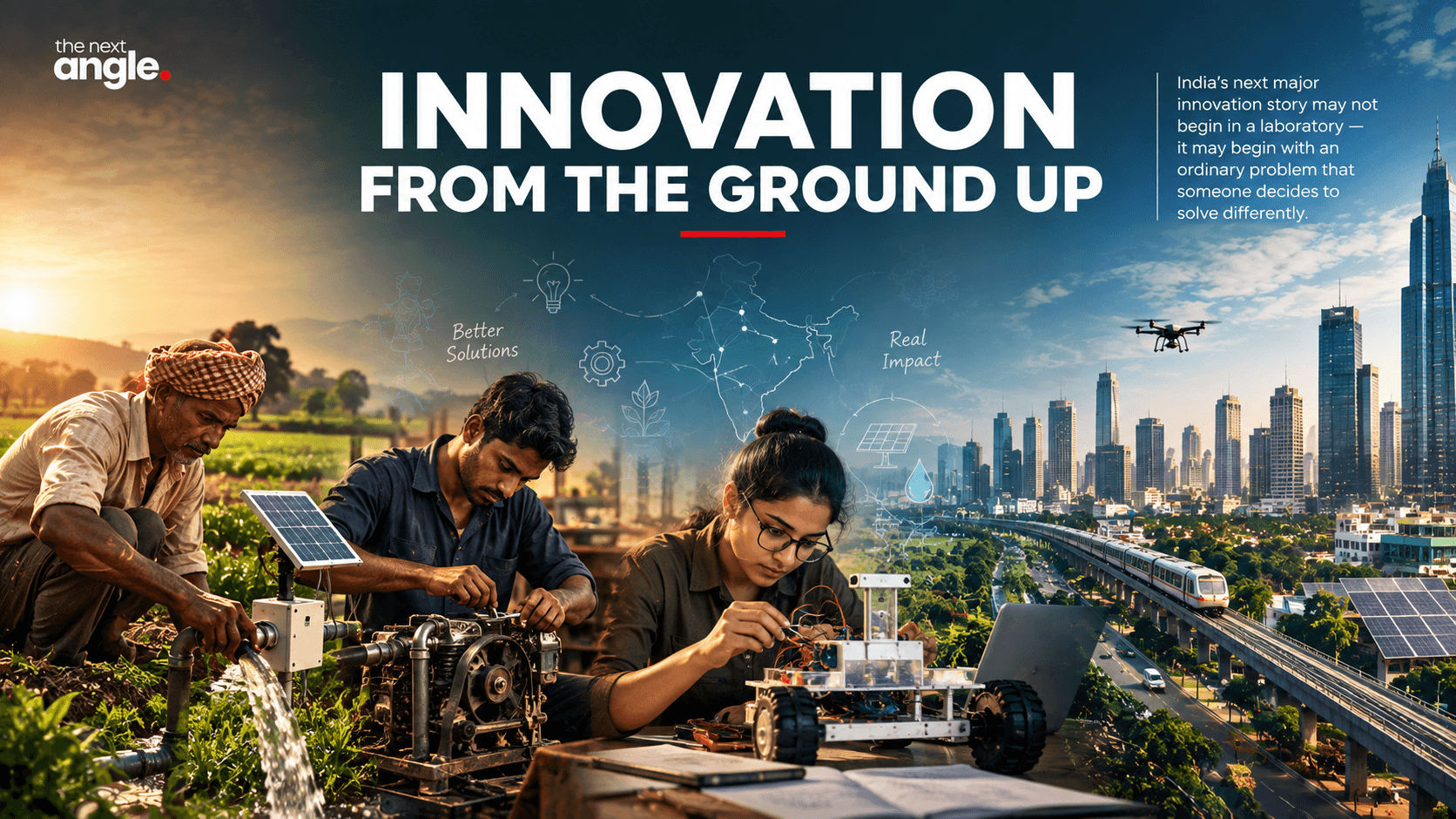
A farmer finding a better way to use water, a mechanic modifying a machine to reduce costs, a student building a low-cost device or a small manufacturer improving an old production process are all examples of innovation.
The common factor is not how advanced the technology looks. It is whether a new idea solves a real problem better than before.
India Has a Different Innovation Challenge
India is home to a huge and diverse population with very different economic and geographical conditions.
A solution designed for a wealthy urban consumer may not work for a small farmer, a street vendor or a rural household.
That creates a unique environment for innovation.
When a Name Disappears From the Voter List, What Happens to Democracy?
Indian innovators often have to think about affordability, reliability, scale and simplicity at the same time.
A product that works perfectly but costs too much may never reach the people who need it most.
The Power of Frugal Innovation
India has become closely associated with the idea of doing more with fewer resources.
Frugal innovation focuses on creating useful solutions while keeping costs under control.
This does not necessarily mean producing something cheap or low quality. The objective is to remove unnecessary complexity and concentrate on what users actually need.
That approach can be particularly important in sectors such as healthcare, agriculture, transportation and education.
A Problem Can Be More Valuable Than an Idea
Innovation discussions often begin with a question:
“What should we build?”
A better starting point can be:
“What problem keeps happening?”
This small change in thinking can completely alter the innovation process.
Instead of searching for a technology looking for a purpose, innovators begin with a real-world difficulty and then search for an appropriate solution.
The problem becomes the starting point.
India’s Villages Are Also Innovation Spaces
Innovation is not limited to Bengaluru, Hyderabad, Mumbai or Delhi.
Across rural India, farmers, artisans and small entrepreneurs regularly adapt tools and processes to local conditions.
Some innovations may never receive venture capital or appear in technology conferences.
Yet they can have immediate practical value for the communities using them.
This is one reason grassroots innovation deserves greater attention.
Agriculture Creates Thousands of Problems to Solve
Indian agriculture faces challenges involving water, weather, storage, transportation, soil health, farm machinery and market access.
Each of these challenges creates opportunities for innovation.
A technology does not have to completely transform agriculture to be valuable.
A small improvement that reduces water consumption, saves labour or reduces post-harvest losses can make a meaningful difference to a farmer.
The most useful agricultural innovations may therefore be the ones that quietly improve everyday operations.
Small Manufacturers Can Be Innovators Too
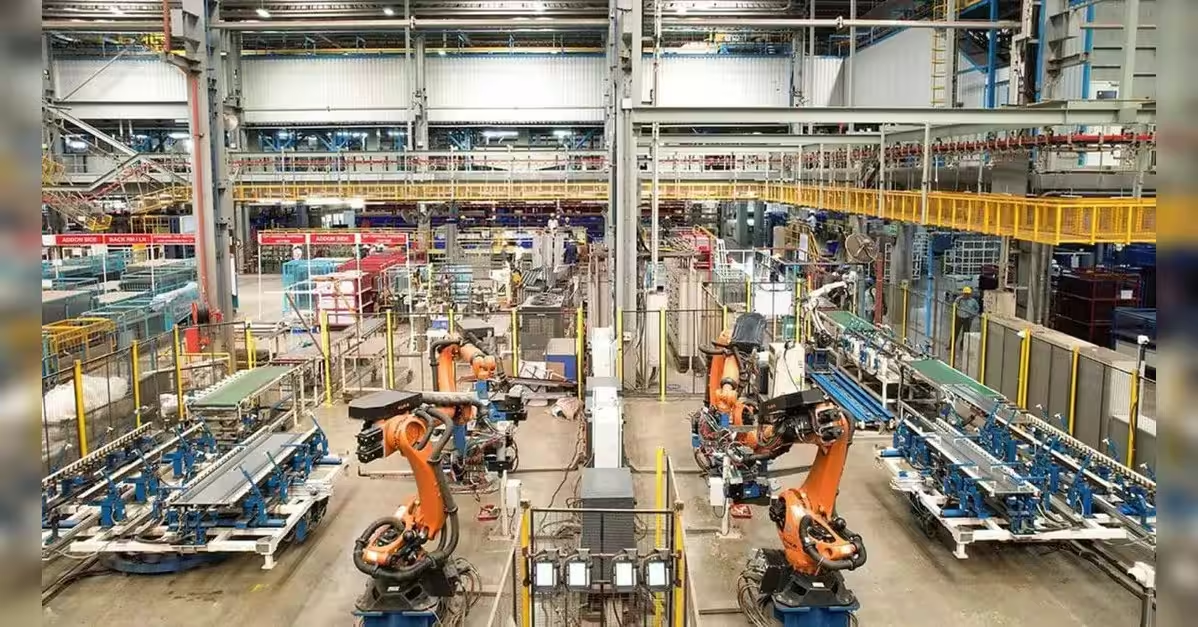
Innovation is also happening inside India's manufacturing ecosystem.
A small factory that redesigns a component, reduces material waste or improves energy efficiency is innovating.
These changes rarely become viral stories because they happen inside production facilities rather than on social media.
But thousands of such incremental improvements can collectively make an industry more competitive.
Innovation is therefore not always a breakthrough.
Sometimes it is a series of small improvements.
The Smartphone Changed What Innovation Could Reach
One of India's biggest advantages is its enormous digital population.
A smartphone can now function as a camera, payment device, communication tool, learning platform, marketplace and business interface.
This creates an unusual environment for innovators.
A digital solution does not necessarily need to build an entirely new physical infrastructure before reaching users.
If the underlying problem is suitable for digital intervention, an existing smartphone can become the distribution channel.
Digital Innovation Is Not Automatically Good Innovation
However, putting something online does not automatically make it innovative.
A badly designed digital service can create more frustration than convenience.
The real test is whether technology reduces difficulty for the person using it.
A complicated application with dozens of features may be less useful than a simple system that solves one problem quickly.
Innovation should therefore be judged by outcomes, not by how sophisticated the technology sounds.
AI Is Opening a New Innovation Layer
Artificial intelligence is changing the possibilities available to Indian businesses, students, developers and entrepreneurs.
Tasks that previously required specialised technical skills can increasingly be supported by AI tools.
This lowers some barriers to experimentation.
A small business can explore ideas faster. A developer can prototype more quickly. A student can experiment with software. A researcher can analyse information in new ways.
But AI itself is not the final innovation.
The important question remains: what problem is being solved?
The Real Opportunity May Be Local
India's diversity means that solutions can emerge from highly specific local problems.
A water-management solution designed for one region may need to be adapted for another.
A transportation innovation that works in a major city may not make sense in a small town.
This creates an opportunity for local innovators who understand their communities better than distant product teams might.
Sometimes proximity to a problem becomes a competitive advantage.
Innovation Needs Users, Not Just Inventors
A technically impressive product can fail if people do not want to use it.
This is especially important when innovations target communities that have limited resources.
Designing with users rather than simply designing for them can reveal problems that are invisible from a laboratory or corporate office.
People using the solution every day can identify practical difficulties much faster.
The best innovation is therefore often collaborative.
Why Small Experiments Matter
Not every new idea needs to begin as a huge company.
An innovation can start with a prototype, a local pilot or a small experiment.
Testing an idea on a limited scale allows creators to discover what works and what does not.
This is particularly important because real-world conditions are often different from assumptions made during the design process.
Small experiments reduce the cost of being wrong.
And being wrong early can be useful.
The Innovation Ecosystem Is Bigger Than Startups
India's innovation ecosystem includes startups, universities, research institutions, established companies, government programmes, manufacturers, independent inventors and local communities.
Each contributes something different.
Startups can move quickly. Universities can develop research. Manufacturers understand production. Governments can create infrastructure and public systems.
Innovation becomes more powerful when these parts of the ecosystem connect.
Why Failure Should Not Always Be Seen as Failure
Some experiments will not work.
A prototype may be too expensive. A product may not find customers. A technical solution may fail under real-world conditions.
That does not necessarily make the experiment useless.
The information gained can help the next attempt become better.
Innovation depends on experimentation precisely because the answer is not known in advance.
The Future May Belong to Practical Innovators
The next generation of Indian innovation may not be defined by one giant invention.
It could emerge through thousands of practical improvements happening simultaneously.
Better farming tools. Simpler healthcare systems. More efficient factories. Affordable educational technology. Cleaner energy solutions. Smarter logistics. Better local infrastructure.
Each may look small on its own.
Together, they can change how an economy functions.
What Makes an Innovation Truly Indian?
There is no single formula for Indian innovation.
But affordability, diversity, scale and resource efficiency are often important considerations when solutions are designed for the Indian market.
A solution that can work across different income groups and geographical conditions has the potential to reach a very large population.
That creates both a challenge and an opportunity.
India does not simply need innovations that work.
It needs innovations that can work at scale.
The Next Angle
The most interesting innovation story in India may not be about the next billion-dollar startup.
It may be about the person who looks at an ordinary problem and asks a different question:
“Is there a better way to do this?”
That question can lead to a new machine, a new business, a new process or sometimes just a smarter way of doing something that millions of people already do.
Innovation does not always begin with futuristic technology. Sometimes, it begins with paying closer attention to everyday life.