The Water Rises, the Questions Remain: Bihar’s Endless Flood Crisis
Every monsoon, Bihar’s rivers rise. But for the people living along its floodplains, the real crisis begins long after the water recedes.
By The Next Angle7 min read
Share this story
Bihar’s recurring floods are more than a seasonal disaster. They are a story of vulnerable communities, disrupted livelihoods, and a flood management system that must look beyond emergency relief. This editorial explores the human cost of the crisis and the urgent need for long-term solutions.
The Story Does Not End When the Water Arrives
Every year, the monsoon brings two different realities to Bihar.
For some, it is the season of rain, agriculture, and renewal.
For millions living in flood-prone regions, it can mean something else entirely: rising water, uncertain livelihoods, damaged homes, and the fear of losing everything they have built.
Floods are part of Bihar’s geography. But the human cost of those floods raises questions that go far beyond the weather.
Why do families continue to face the same disruption year after year? Why does recovery often take longer than the disaster itself? And what does it say about the state’s development when a natural event can turn into a prolonged social crisis?
These are not questions that can be answered by looking at the water level alone.
A River Can Be Both a Lifeline and a Threat
Degrees Are Increasing, but What Skills Are Employers Actually Looking For?
Bihar’s rivers have shaped its economy, agriculture, and settlements for centuries.
The Ganga and its tributaries support farming, transport, and communities. But during the monsoon, those same waterways can become sources of immense destruction.
The Kosi, Gandak, Bagmati, Kamla Balan, and other rivers are part of a complex river system connected to the Himalayan region.
Heavy rainfall, upstream water flow, local drainage conditions, and the geography of the plains all influence flood risk.
The challenge is not simply to control rivers.
It is to understand how people, infrastructure, and rivers can coexist more safely.
That is where the conversation becomes more complicated.
The First People to Pay the Price
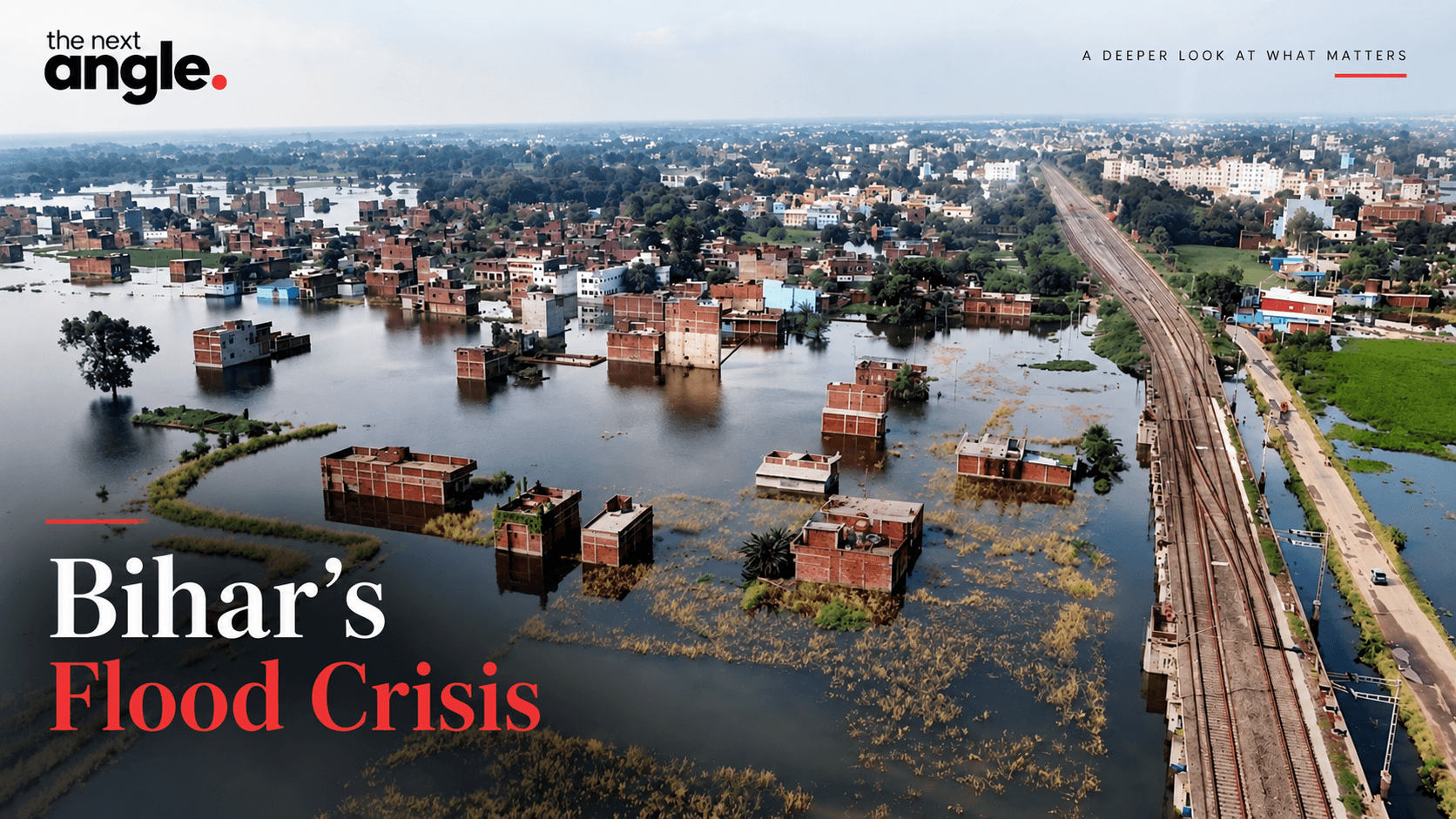
When floodwaters enter a village, the immediate images are familiar: boats moving through submerged roads, families carrying belongings, and fields disappearing beneath the water.
But the real story is often found in what those images do not show.
A farmer may lose an entire season’s income.
A daily wage worker may lose access to work.
A family may have to spend its savings repairing a damaged home.
A child may miss school for weeks.
For households already living with limited financial security, even a temporary disruption can have long-term consequences.
The flood is an emergency. The recovery is a much longer story.
The Cost of Starting Over
A family that leaves its home during a flood does not leave its problems behind.
It may return to damaged walls, contaminated water, destroyed household items, and a livelihood that no longer exists in the same form.
For farmers, the loss of crops can affect the next season as well. For workers, the loss of income can make it difficult to pay for food, education, and healthcare.
This is why measuring the impact of a flood only through the number of affected people or submerged villages tells an incomplete story.
The deeper question is how many families can recover—and how long that recovery takes.
The Limits of Relief
Relief is essential.
Food, clean drinking water, medical support, rescue boats, and safe shelters can save lives. During a disaster, the speed and reach of these services matter enormously.
But relief is not the same as recovery.
A family may receive food for several days and still have no safe home to return to.
A farmer may receive immediate assistance and still lack the resources to plant the next crop.
A child may have access to a temporary shelter but remain out of school long after the water has receded.
The difference between emergency response and long-term rehabilitation is one of the most important parts of the flood debate.
«The question is not only whether help arrives. It is whether people can rebuild a life after it does.»
The Embankment Question
For decades, embankments have been central to Bihar’s flood management strategy.
They are designed to protect settlements and agricultural land from overflowing rivers. In many places, they provide an important layer of protection.
But embankments are not a complete answer to every flood problem.
Their effectiveness depends on design, maintenance, river behaviour, drainage, and the conditions surrounding them.
When water accumulates outside an embankment, or when a structure is damaged, the consequences can be severe.
This does not mean that embankments are unnecessary. It means that flood protection requires a wider approach.
River management cannot be reduced to a single structure.
It must include early warnings, drainage, safe evacuation, land-use planning, and long-term community preparedness.
A Crisis of Inequality
Floods do not affect everyone in the same way.
A family with savings, a strong home, and access to transport may have more options during a disaster.
A landless worker, small farmer, elderly person, or family living in a vulnerable house may have far fewer.
This difference matters.
When a flood destroys a family’s home, the financial loss is not equal across households. When a road is submerged, the impact is not the same for someone with a private vehicle and someone who depends on public transport.
The flood exposes existing inequalities.
And it raises a larger question about development: Who is protected when disaster strikes, and who is left with the longest road back?
What a Better Future Could Look Like
There is no single solution to Bihar’s flood problem.
But a more effective approach would need to look beyond emergency relief.
1. Prepare Before the Water Rises
Early warning systems should reach vulnerable communities in time, using clear and accessible communication.
**
2. Build for Recovery, Not Just Survival**
Homes, roads, schools, and healthcare facilities in flood-prone areas need planning that accounts for recurring risks.
3. Protect Livelihoods
Farmers and workers need support that helps them recover income—not just survive the immediate emergency.
4. Improve River and Drainage Management
Flood protection should consider the entire river system, including embankments, drainage, and changing water flows.
5. Put Communities at the Centre
People living in flood-prone areas understand the local landscape better than almost anyone. Their experience should be part of planning and decision-making.
A flood-resilient Bihar will not be created by one announcement or one project.
It will require consistent work over many years.
The Politics of Remembering
Floods receive attention when the water rises.
There are reports, rescue operations, official statements, and images of affected communities.
Then the water recedes.
The news cycle moves on.
But the people who lost homes, crops, income, or months of their lives do not experience the same quick return to normal life.
This is where public attention matters.
A recurring disaster should not become an ordinary disaster.
If the same communities face the same vulnerabilities every year, then the discussion must move from response to accountability.
What worked? What failed? What changed? What remains unresolved?
These questions should be asked before the next monsoon—not after the next crisis has already begun.
The Bigger Question
Bihar’s flood crisis is not simply a story about nature.
It is a story about how a state prepares for risk, protects vulnerable people, and builds for the future.
The rivers will continue to shape the land.
The monsoon will continue to bring uncertainty.
But the scale of human suffering is not entirely predetermined.
Better planning, stronger infrastructure, more effective warnings, and meaningful rehabilitation can change the experience of floods.
The challenge is to make those improvements consistent—not temporary.
Conclusion: Beyond the Headlines
The water will eventually recede.
The roads will reopen. The boats will return to their usual places. The headlines will move on to something else.
But for the families who have lost homes, crops, income, or months of their lives, recovery may take much longer.
Bihar’s flood crisis deserves more than seasonal attention.
It deserves sustained public debate, stronger preparation, and a commitment to protecting the people who are most vulnerable.
Because the real measure of a flood response is not just how quickly the water is removed.
It is how quickly—and how fairly—people can rebuild their lives.
The Next Angle’s Take
Bihar does not need to be defined by the floods that return every year.
But changing that story will require more than emergency relief.
It will require the willingness to ask difficult questions before the next disaster arrives.
The water may rise again. The response should not remain the same.