India’s Next Manufacturing Shift Is From Assembly to Components
India has become a major electronics assembly hub. The harder—and potentially more valuable—step is making more of the parts that go inside the products.
By Editorial Desk7 min read
Share this story
India can assemble phones at scale, but the next industrial challenge is deeper: building the components, materials and supplier networks that capture more value before the final product leaves the factory.
The factory floor is changing
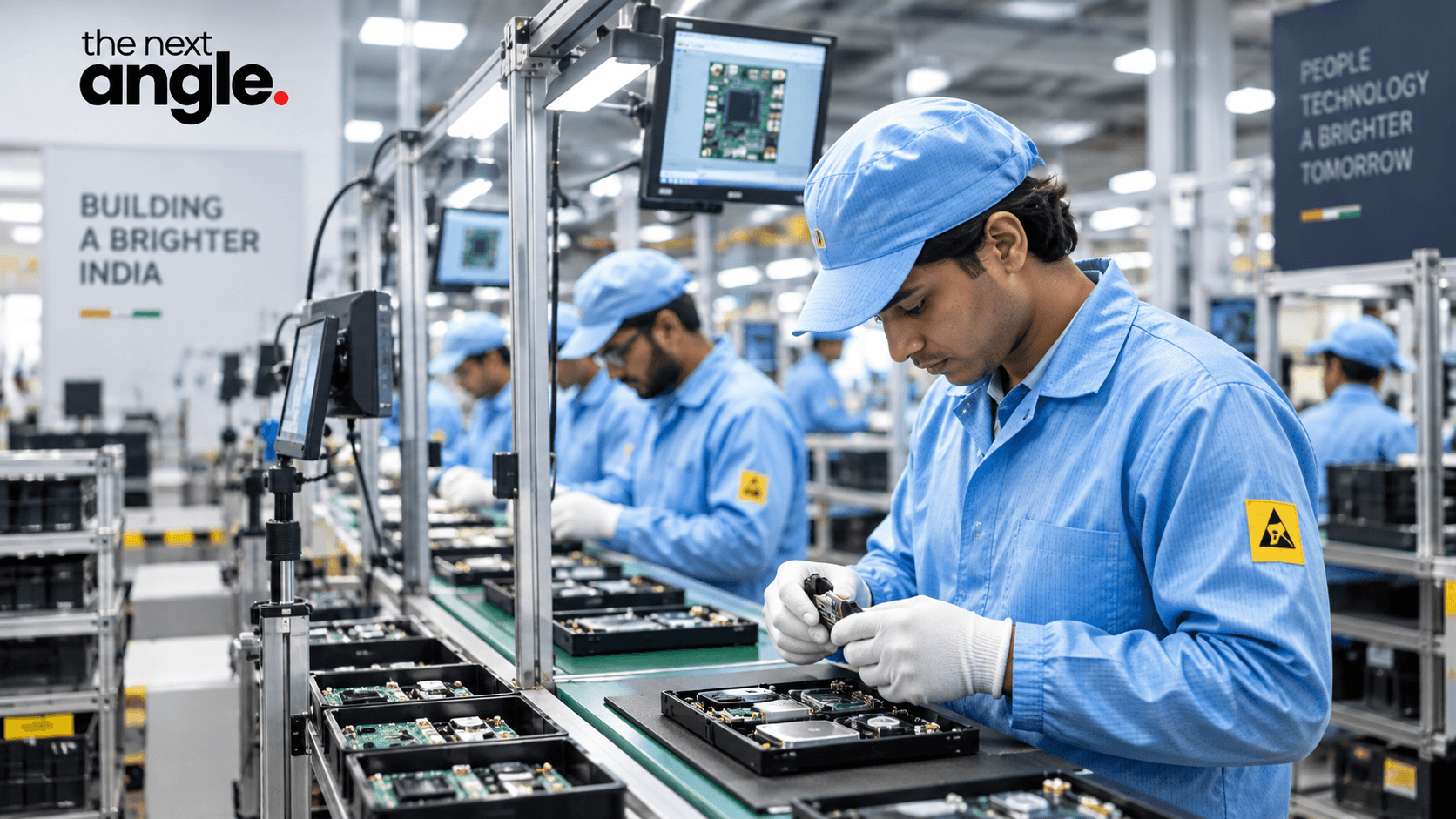
India's manufacturing story has often been told through the number of smartphones and electronics products assembled inside the country.
That story is real—but incomplete.
A finished smartphone contains dozens of important components: printed circuit boards, camera modules, displays, batteries, connectors, enclosures and other specialised parts.
If most of those components arrive from elsewhere, local assembly captures only part of the economic value.
That is why India's next manufacturing challenge is not simply making more products.
It is making more of what is inside them.
India already assembles almost all phones sold domestically
Recent analysis from Jefferies, reported by Financial Express on September 14, 2026, estimates that India now assembles around 99% of mobile phones sold domestically. But domestic value addition remains below 20%, according to the same analysis.
Those figures reveal an important distinction.
India Faces New 100% US Tariff Risk: What the Russia Oil Bill Could Mean for Trade
A product can be made in India in the sense that its final assembly happens here, while much of the underlying industrial value is still created elsewhere.
The next phase of manufacturing policy is therefore trying to move the country further upstream.
Components are where the deeper ecosystem begins
The government's Electronics Components Manufacturing Scheme (ECMS) is designed around precisely this gap.
The scheme's outlay has been increased to ₹40,000 crore, and 106 projects have reportedly received approval with committed investment of about ₹69,548 crore, according to the September 14 analysis.
The targeted areas include:
Printed circuit boards
Camera modules
Display modules
Mechanical components
Certain semiconductor-related components
Other electronics manufacturing inputs
The objective is larger than replacing imports one product at a time.
It is about creating supplier density.
And supplier density is one of the hardest things for an emerging manufacturing economy to build.
Why supplier networks matter
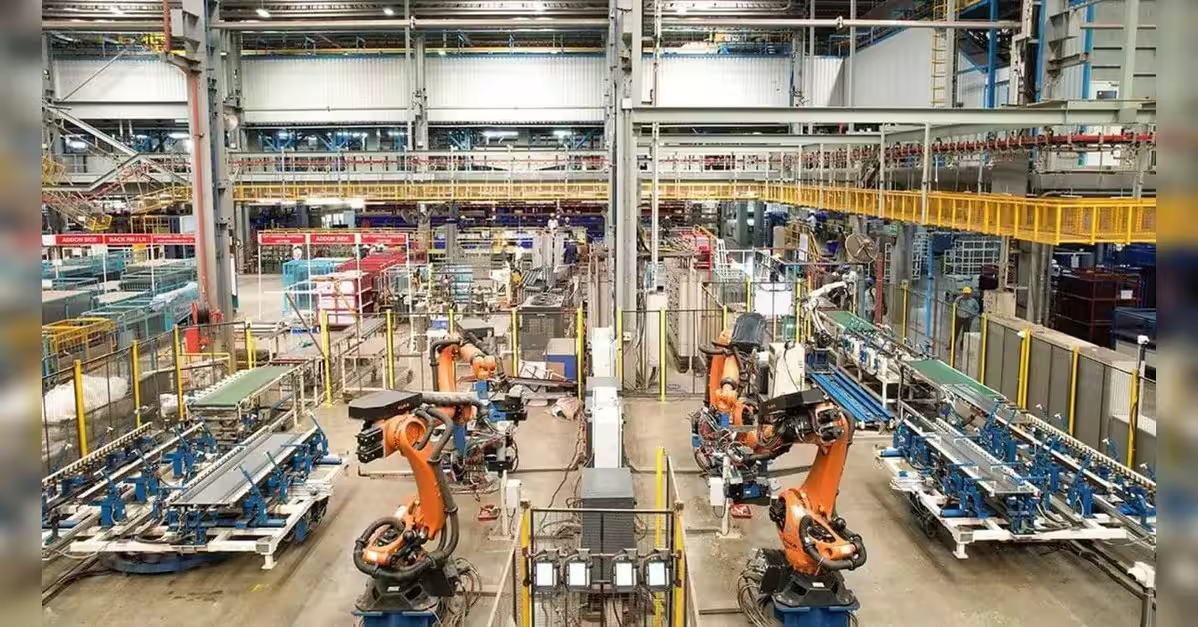
Consider a smartphone factory.
It needs cameras.
The camera supplier needs lenses, sensors, connectors and specialised components.
Those suppliers need machinery, materials, precision manufacturing and testing.
Each additional local supplier creates demand for another layer of suppliers.
That is how manufacturing ecosystems develop.
A country eventually stops being simply a place where products are assembled and becomes a place where industrial knowledge accumulates.
Workers become specialised.
Companies learn to meet demanding quality standards.
Suppliers become faster.
Logistics become more efficient.
Engineering capabilities improve.
The ecosystem starts feeding itself.
The next race is not about cheaper labour alone
Low-cost manufacturing can attract factories.
But it is not enough to build a durable electronics ecosystem.
Companies also need:
Reliability.
Precision.
Speed.
Quality consistency.
Engineering capability.
Local suppliers capable of scaling with global customers.
This is particularly important as products become more complicated.
Industrial machines need sensors and control systems.
Consumer electronics are only one part of the opportunity.
India could build beyond smartphones
One of the most interesting consequences of a stronger components ecosystem is that the same suppliers do not necessarily have to remain tied to one product.
A company manufacturing precision enclosures could potentially serve smartphones, automotive systems and industrial equipment.
A PCB manufacturer could supply consumer electronics, medical devices and industrial machines.
A connector manufacturer could sell into several industries.
That creates an economic multiplier.
One supplier ecosystem can support multiple manufacturing sectors.
This is why component manufacturing may ultimately matter more than any individual electronics product.
The difficult part is technology transfer
There is, however, a major obstacle.
Some advanced components require specialised manufacturing knowledge, expensive equipment and long qualification cycles.
A company cannot necessarily build a world-class component factory simply because capital is available.
It needs:
Process expertise
Engineering talent
Quality-control systems
Reliable raw materials
Technology partnerships
Customer qualification
Consistent production at scale
This is why partnerships with established global manufacturers can matter.
They can shorten the learning curve—but India must still develop domestic capabilities rather than becoming permanently dependent on imported know-how.
The real goal should be industrial learning
The most valuable outcome of manufacturing investment is not necessarily the factory itself.
It is what workers, engineers and suppliers learn while operating the factory.
Once local companies learn how to manufacture one sophisticated component, they can potentially apply that knowledge elsewhere.
Over time, that creates a deeper industrial base.
This is how assembly can become manufacturing.
And manufacturing can eventually become design-led manufacturing.
What happens if India succeeds?
The upside goes beyond reducing imports.
A deeper component ecosystem could potentially create:
More specialised manufacturing jobs
New supplier companies
Greater export capability
Stronger engineering expertise
More resilient supply chains
Faster product development
Greater domestic value capture
It could also make India more attractive to global manufacturers that want diversified supply chains.
But none of these outcomes is automatic.
Government incentives can encourage investment, but companies ultimately need to produce competitively and find customers.
The number that matters may not be factory count
Manufacturing announcements often focus on investment amounts and new facilities.
Those numbers are useful.
But they do not tell us whether an ecosystem is becoming genuinely deeper.
A better set of questions would be:
How many critical components are being made locally?
How much value is being created inside the country?
How many Indian suppliers can meet global quality standards?
How much of the technology is being developed domestically?
Are local manufacturers exporting components—not just finished products?
Those measures tell us much more about industrial maturity.
The real manufacturing breakthrough is not when a product gets assembled in India. It is when the factory next door starts making the parts that factory needs.
India has already demonstrated that it can scale electronics assembly.
The next decade will reveal whether it can turn that assembly base into** a dense, competitive manufacturing ecosystem.**
Note:The value-addition and investment figures cited above are estimates or reported commitments, not guarantees of future production. Actual domestic value capture will depend on project execution, technology, costs, supplier development and global demand.