BRICS in a Changing World: Can the Group Challenge the Existing Global Order?
As BRICS expands its influence, the real question is whether it can become a powerful alternative voice in global governance—or remain a group divided by competing interests.
By Editorial Desk5 min read
Share this story
BRICS is no longer just an economic grouping of emerging economies. With its expanded membership and growing influence, the bloc is trying to reshape global trade, finance and diplomacy. But internal differences may determine how far it can actually go.
Why BRICS Matters
For decades, the global economic system has been strongly influenced by Western countries. The US dollar remains central to international trade and finance, while institutions such as the IMF and World Bank play a major role in global economic decisions.
But the balance of power is changing.
Emerging economies want a greater voice in global affairs. BRICS has become one of the most important platforms for this demand.
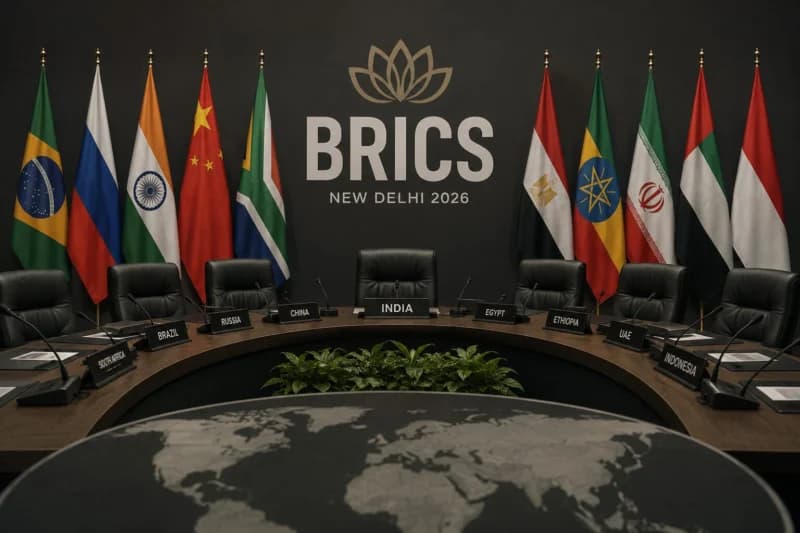
The group began with Brazil, Russia, India and China. South Africa later joined, and the grouping has since expanded to include countries such as Egypt, Ethiopia, Indonesia, Iran, Saudi Arabia and the United Arab Emirates.
With its large population, economic strength and energy resources, BRICS has significant global influence.
However, its biggest challenge is turning that influence into coordinated action.
India’s Role in BRICS
Degrees Are Increasing, but What Skills Are Employers Actually Looking For?
India’s BRICS presidency in 2026 is focused on resilience, innovation, cooperation and sustainability.
New Delhi wants BRICS to become more than a political discussion forum. Its priorities include:
Economic cooperation
Technology and innovation
Food and energy security
Stronger supply chains
Startup cooperation
Sustainable development
Reform of global financial institutions
For India, BRICS is also a diplomatic balancing platform.
It allows India to maintain dialogue with Russia and China while continuing strategic partnerships with the United States, Europe and other Western countries.
This gives India flexibility in a divided global environment.
One of BRICS’ major ambitions is reducing dependence on the US dollar.
The member countries have discussed:
Using national currencies in trade
Improving cross-border payments
Developing financial technology cooperation
Creating alternative payment systems
Reforming global financial institutions
However, replacing the dollar is not easy.
A common BRICS currency would require strong economic integration, stable financial systems and deep trust between member countries. At present, their monetary policies, inflation rates and economic priorities are very different.
Therefore, the more realistic goal is not replacing the dollar immediately.
It is creating more choices.
If businesses can trade through national currencies and alternative payment networks, they may become less dependent on a single financial system.
The New Development Bank
BRICS has already created the New Development Bank, headquartered in Shanghai.
The bank supports infrastructure and sustainable development projects in member and partner countries.
It can potentially help finance:
Roads and transport
Renewable energy
Digital connectivity
Urban infrastructure
Water and sanitation
Industrial development
The bank is important because developing countries often believe that traditional global financial institutions do not adequately represent their needs.
However, its long-term success will depend on the size of its financing, its governance and the quality of the projects it supports.
The Biggest Challenge: Internal Differences
BRICS is not a united political alliance.
Its members have different interests and foreign policies.
Russia has a difficult relationship with Western countries, while India maintains strong economic and strategic partnerships with them.
The inclusion of Iran, Saudi Arabia and the UAE also makes the group more complex. These countries may share interests in energy and trade, but they do not always agree on regional security issues.
This creates a central contradiction:
BRICS wants to speak with one voice, but its members often have different priorities.
China’s economic dominance is another concern. Some members welcome Chinese investment, while others worry about becoming too dependent on Beijing.
Is BRICS Anti-Western?
BRICS is often described as an anti-Western bloc, but that description is too simple.
Not every member wants direct confrontation with Western countries. Many are mainly interested in:
Better access to global markets
More investment
Technology partnerships
Stronger trade relations
Reform of global institutions
A more accurate description is that BRICS wants to reduce the concentration of global power.
Its members want emerging economies to have more influence in decisions that affect the world.
If BRICS becomes too openly anti-Western, it may limit its own economic opportunities. If it focuses on practical cooperation, it could attract more countries and become more influential.
What to Watch Next
The important questions for BRICS are:
Will members make progress on alternative payment systems?
Can they increase trade using national currencies?
Will they support reforms in the IMF and World Bank?
Can they cooperate in technology and energy?
Can India bridge differences between China, Russia and other members?
Will political statements lead to real projects?
The group’s future will depend less on summit declarations and more on implementation.
BRICS represents the changing balance of global power.
Its members have large populations, major economies, energy resources and growing strategic influence. This gives the group the potential to reshape trade, finance and diplomacy.
But potential is not the same as power.
BRICS must overcome internal rivalries, economic differences and institutional weaknesses. It must prove that countries with different interests can still work together.
The group may not replace the existing global order overnight. But it can pressure that system to become more inclusive and representative.
The real question is simple:
Can BRICS build enough trust to act together?
If it succeeds, BRICS could become a major force in shaping the next global order. If it fails, it may remain a powerful idea with limited practical impact.